
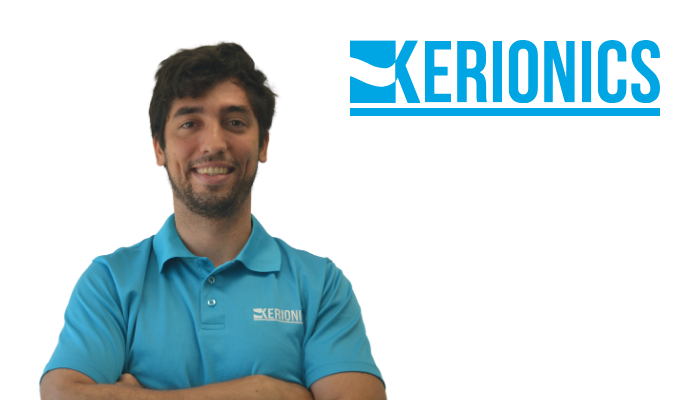
The ELECTROLIFE coffee break with Pablo Campos Rams from Kerionics
“My name is Pablo, and I work at Kerionics (KER), a Spanish technology company developing high-temperature electrolysers and advanced ceramic membrane systems. In ELECTROLIFE, my role focuses on project coordination and technical follow-up, ensuring that the work carried out fits Kerionics’ strategy to bring high-temperature hydrogen technologies to the market.”
What was your original motivation to become a researcher?
“I have always believed that the future of the planet depends on the actions of the current generation. Seeing how pollution and climate challenges are pushing the world to its limits motivated me to work in technology and innovation. For me, developing clean energy solutions is both a responsibility and a personal commitment. Working on hydrogen technologies, especially high-temperature systems, allows me to contribute to changing our trajectory towards a more sustainable and resilient future.”
What is your (main) research area today?
“Today my work focuses on high-temperature hydrogen technologies, particularly solid oxide electrolysis (SOEC/SOEL) and protonic ceramic electrolysis cells (PCEC). My role combines technical coordination, system assessment and market-oriented project management to support the development, validation and future integration of these technologies in industry.”
What are the main objectives of your team in ELECTROLIFE?
“Kerionics aims to demonstrate that high-temperature protonic electrolysis (PCEC) is technically viable, durable and capable of scaling towards industrial deployment. Together with other partners in ELECTROLIFE, we are working to understand degradation mechanisms, improve lifetime and confirm that this technology can reach the performance levels needed for commercial applications. ELECTROLIFE is a key step in the long-term development we have been pursuing.”
What expertise and facilities does your team have to meet those objectives?
“Kerionics has a team of around 25 highly qualified engineers and scientists with expertise in ceramic technology, high-temperature electrochemistry, complex system design and hydrogen production processes. Our facilities include membrane manufacturing lines, electrolysis stack assembly areas, several balance-of-plant testing benches, gas supply systems and advanced diagnostic equipment such as impedance analysers and chromatographs. This allows us to cover the full chain from material development to prototype testing.”
Which aspects of your research at ELECTROLIFE do you find the most innovative and what unique opportunities offer ELECTROLIFE to you and your organisation?
“The most innovative aspect is the efficiency and potential impact of high-temperature protonic electrolysers, which could surpass the performance of existing hydrogen technologies. From a technical and business perspective, bringing such breakthrough innovation to market from a company like Kerionics is both challenging and exciting. ELECTROLIFE offers a unique opportunity by providing financial support, scientific collaboration and access to leading institutions, all of which accelerate our ability to advance and validate this technology. Without programmes like ELECTROLIFE, pushing innovation at this level would be extremely difficult.”
How do you see the future use and impact of the ELECTROLIFE results?
“I believe ELECTROLIFE will contribute to developing more robust, efficient and competitive high-temperature electrolyser technologies. For Kerionics, these results will strengthen our roadmap toward industrial demonstration and commercialisation. More broadly, the project can help accelerate the adoption of high-temperature hydrogen technologies in energy-intensive industries, supporting a cleaner and more sustainable industrial future.”